Why (I) Write. Part 2. Journaling.

If I am to consider how the act of writing saved me (provided me purpose, I mean, a reason for being), then I must talk about journaling.
Journaling is a sacred act of being. It is a holy rite and ritual where one is alone with pen and page to let one’s mind loose on that page. No other medium is as freeing. No other medium is as frightening. Freeing, because you may put down anything you like; your words are your thoughts. Frightening, because of that same fact.
I began my first journal in 1985. I was sitting in my college dorm room. The clutter and clatter outside in the hall was trying to make its way in, but I could not let it. So I wrote about it. To try to make sense of it. It’s all I’ve ever tried to do with my journaling. With any of my writing. Express myself onto the page in the hope of understanding what it is exactly that’s going on inside. Word by word. Line by line.
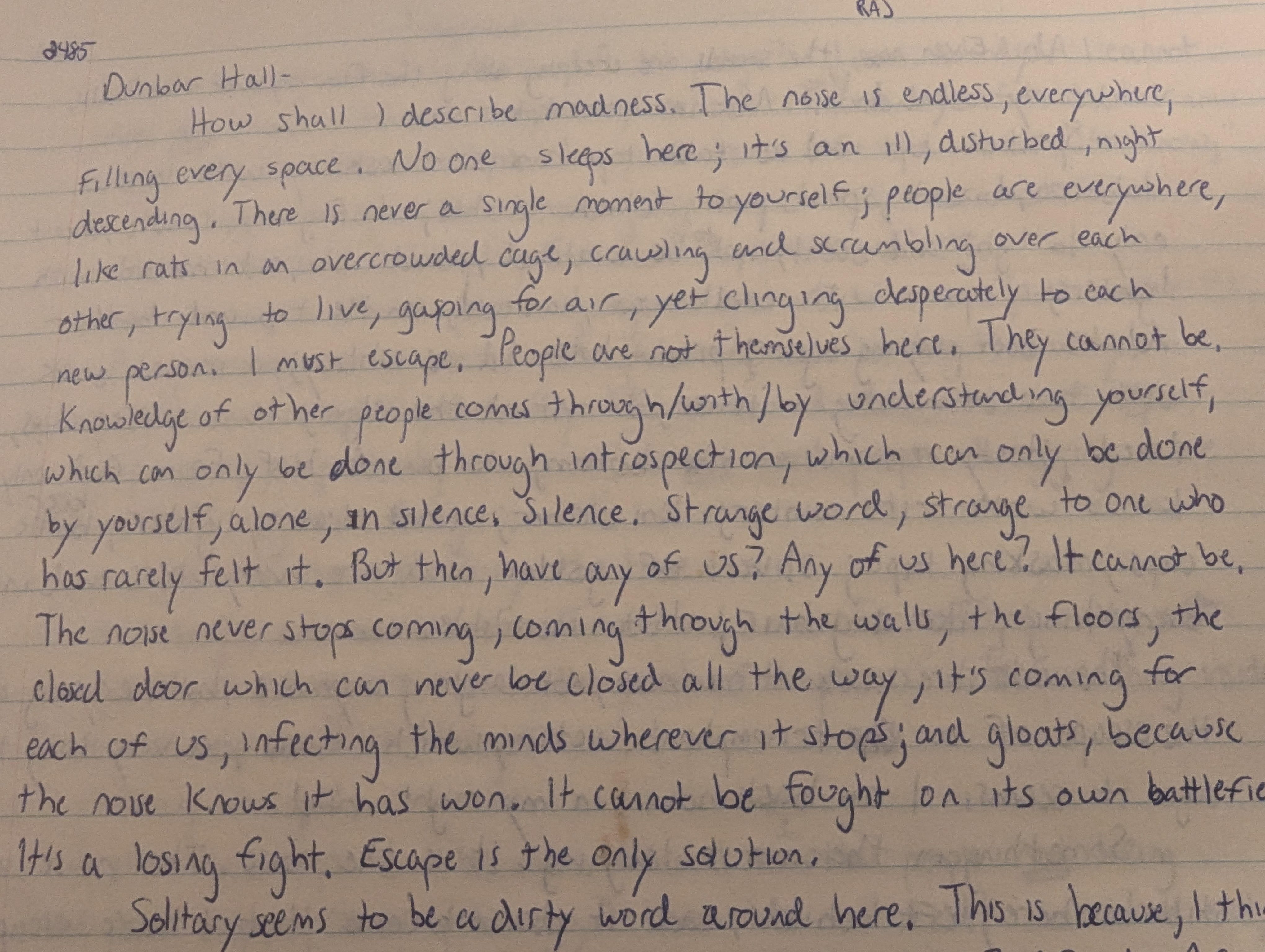
Typically I do not stop to consider a word or word choices. Generally I simply sit and open the notebook and pick up my pen. I’ve often said that I do not know what writer’s block is. I’ve only ever experienced writer’s tired. This is true still for me, I think.
Now a word about notebook and pen. I am not being fussy here but practical. A writer’s tools are just as important to him as tools are for any trade, whether it’s a surgeon’s scalpel or the handyman’s hammer. It took me a few years to find the right notebook and then a few years more to settle on the proper pen. Let me describe them both.
For my notebooks I use Mead’s spiral, 1 subject, college ruled notebook, 100 sheets. This has a water-resistant cover and reinforced storage pockets, perfect for tucking in whatever mementos are worth keeping from the time of that particular journal. (I also use Mead’s smaller two notebooks when I’m working on longer pieces like a novel; more on that in a later post. Mechanics are important for writers, and I’m always surprised to see not too many address this.)
My journey to my current pens took quite some time. Obviously when you’re a young writer you’re simply picking up any old instrument to do your work with. You’re overcome with the joy and thrill of the act of writing, so paying less attention to the feeling—the sensory inputs and outputs—of this instrument in your hand. With much writing, though, can come much pain, mental and emotional and of course physical. As a young writer I’d sit and stretch my fist and fingers and wonder if there were a better way to do this. Plastics pens, cheap pens, fat pens, pens shaped weirdly to mimic and assist your grip. I tried many, and many failed. Colors, too. Years ago I finally settled on the Swedish Ballograf ballpoint pen. Blue ink. It fits my hand perfectly, and I’ve used these pens for years now, running through refill after refill, until now it feels in my hand what I imagine the old sculptor feels about his perfect chisel in his hand. It simply is. With him. An extension of him and his mind. Used to shape what he sees. From nothing to something.
Which is the point—the purpose—of writing. To bring something out of nothing. “In the beginning was the Word…” With fiction and poetry and nonfiction there’s working and reworking and reworking the words until you think and feel and sense them being what you intend them to be. Journaling is a different experience. With journaling, with pen in hand at your notebook, you’re free. Free to write whatever you please, whatever you think, whatever you feel. There’s no going back. It’s entirely liberating. Just go forward. Push forward. Write whatever you like. Through ups and downs and ins and outs, backwards and forwards, your pen will take your mind to places your words never imagined.
Be playful. Be serious. Be bold. Be right. Be wrong. It doesn’t matter. The point and the purpose of journaling is to get in the excellent habit—the discipline—of sitting down at your desk to write, to get what’s inside out.
I’ve journaled since 1985. That’s 40 years now. A few years ago I estimated the number of words I’d written in my journals, and it came to a million. I blew past that quickly. Sometimes I took breaks. Still do. Most often not. Because in the early days the journaling was all I had. I’d say for a good 15 years or more it was all I had. It was all I could have. Being married to someone who never understood me or my need to write was the biggest mistake of my life. It took me places I never wanted or planned to go.
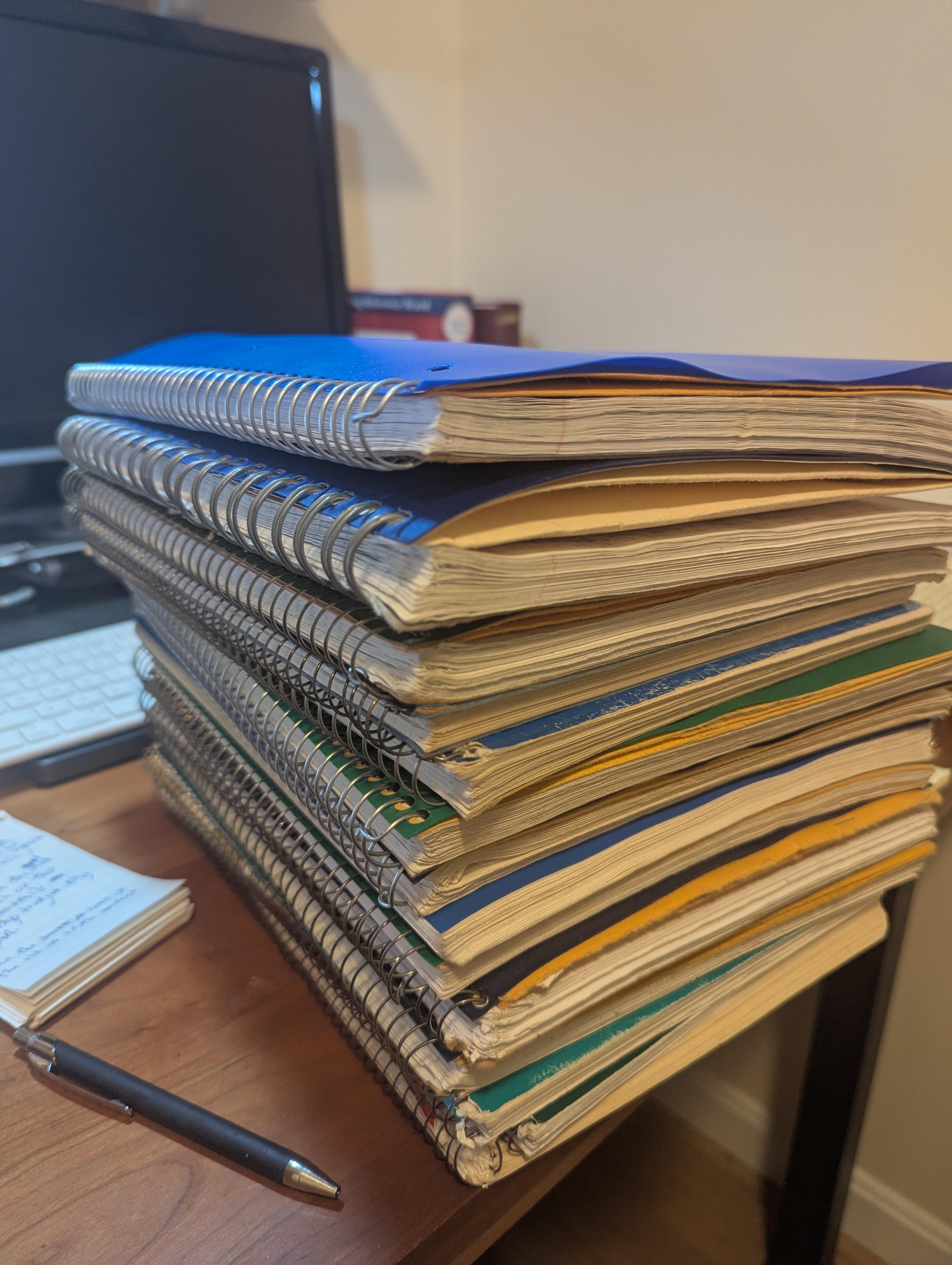
Journaling kept me sane and whole through that time. It kept me disciplined in the simple, difficult practice of sitting down to write. It was the entryway—the only one I had—into writing my first novel.
If this reflection resonated, Part 1 looks at the deeper reasons I write at all, and where that need first took hold. In the next part, I’ll turn outward—toward what happens when private writing becomes public, and what it asks of you in return.